Because of you…

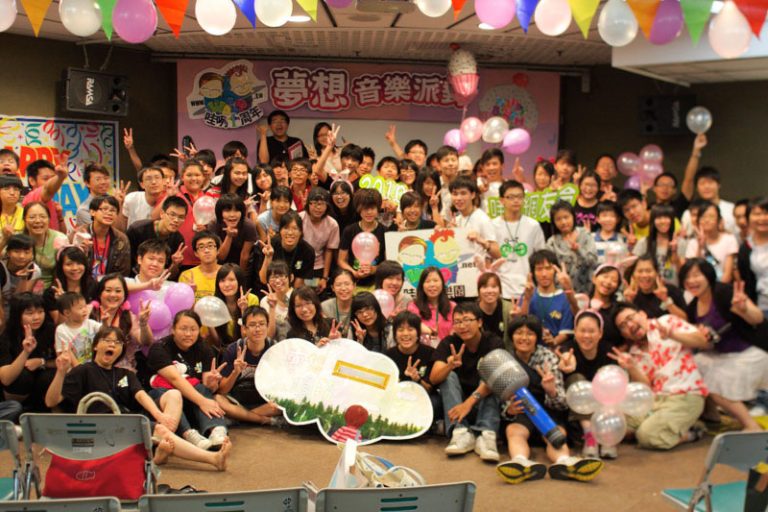
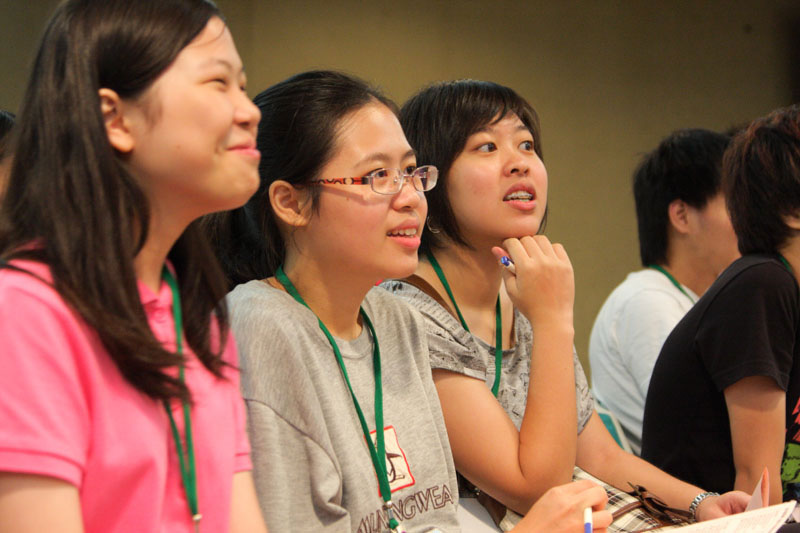
Young  people are ministered to through school assemblies, clubs, literature, concerts, prayer ministries and a state-of-the-art Internet web ministry called “Walei.” The goal of the Walei ministry is to reach young people on the internet.

The Walei Internet Initiative

Challenges of the Electronic Age

Twenty-first century Taiwan is entering the electronic age at a very rapid pace. According to statistics for the first half of 2002, more than 7,500,000 people on the island use the Internet: about 35% of the population is online and 42.3% of all families have Web access. Even the most remote villages are fully wired and Internet ready. From grade four in elementary school, children start technology-infused classes, so by the time students reach junior high school, about 80% of them have become habitual users of the Internet.

In terms of per capita broadband usage, Taiwan and Hong Kong both rank second in the world, behind South Korea only; moreover, in terms of “E-Readiness,” both Taiwan and South Korea are considered to be among the top three nations worldwide.

But the advances of the information age have also taken their toll on the youth of today. The problems that parents and teachers are most concerned about include: addiction to the Web, sexual content on the Internet, and socializing on the Internet. Teenagers are attracted by the freedom of the Internet space and use the Internet to find friends and play computer games, so the number of students who participate in extra-curricular activities at school is decreasing and general teen entertainment choices and patterns of making friends have changed: the Internet caf? has become the teenagers’ favorite place of entertainment.

Youth for Christ in Taiwan has seen the need for youth evangelism on the World Wide Web. Attempting to spread the gospel as widely as possible, Youth for Christ began work on the Internet in the year 2001, setting up a web site for youth called “Walei” and training volunteers to enter the virtual world of the Internet to reach the souls of the youth of today. Within just one year, the site signed up more than 17,000 members, 72% of whom are non-Christians.

Through Walei, we have been able to reach many youths that we would otherwise not have been able to reach. We hope that more Christians will join our ranks in accepting the challenges of the Electronic Age and participate in the Internet evangelical work that Walei has started.

The target audience for Walei is Chinese youths between the ages of thirteen and eighteen who frequent the Internet, including junior high school, senior high school, and junior college students, as well as university and technical college students.

Matthew 5:16 says, “Let your light shine before men, that they may see your good deeds and praise your Father in heaven.”

So the purpose of Walei is to establish a presence in the virtual world of the Internet to witness the new life that God has given us, and through Web interaction:

  • to bring to youths a value system that is based on Christian beliefs
  • to encourage the development of God-like qualities in all of us
  • to provide a perspective that is different from that of the secular world
  • to help youths resist the temptations of the world
  • to care for the various needs of the minds, bodies, and souls of youths.

On the Walei Web Site, we hope to

  • create a Christ-centered environment, which will give every member the opportunity to learn about the Christian faith
  • move from virtual relationships to real relationships, in order to bring youth members to the heart of the Christian faith
  • work with churches and school-based youth fellowships to promote Internet evangelical work among local churches.

Strategies for Evangelism

The goal of Walei is to attract youths to our web site by offering what commercial web sites cannot offer and to promote the value system and beliefs of the Christian faith. We have outlined four strategies:

Emphasize the Artistic and Interactive Aspects of the Web Site. To give the site a sense of the imaginative and the artistic, we based its structure on the concept of planets in space. We put the members on various planets and gave cute, humorous, and fanciful names to the houses that they occupied on those planets; we also designed the interiors of those houses to look like spaceships. In addition, we also included special planets whose mission is to provide entertainment, counseling, and advice to the residents of the various planets. And finally, every member’s house was equipped with a complete interactive system, which includes a bulletin board, a diary, a mailbox, a pen pal system, instant messaging, a virtual caf? chat room, and a special topics discussion area, to encourage members to communicate with each other and develop friendships.

Create the Best Environment for Evangelical Work. On the site, we have tried to create an environment that will make non-Christians feel at ease so that they will not feel put off by its religious background. The site will also provide plenty of opportunities for non-Christian members to get to know some Christian friends and learn about the Christian value system, which hopefully will make them recognize the uniqueness of the site and encourage them to open their hearts to share their problems and seek help.

Cultivate Teams of Volunteers who will Enter the Web to Become Fishers of Men’s Souls. Aside from a group of Christian teachers and university and seminary students who serve as the Christian friends of the youth members, a complete volunteer system has also been set up on Walei:

  • Basic volunteers: Members who are more mature are selected to be area leaders who take on the responsibilities of caring for other members, developing site content, and encouraging member participation in site activities. They also engage in cultural and religious discussions with the members. Presently, there are about 250 student members who have been designated as basic volunteers.
  • Core Counselors: Aside from training a group of mature and net savvy Christians called the “Guardian Angel Team” who reach out to non-Christian student members through friendship and sow the seeds of the gospel, Walei has also trained a group of about forty core counselors whose mission is to spread the gospel on the Web. We hope that the number of core counselors will reach a hundred by year’s end.
  • Secret Counselor: A “Secret Counselor Mailbox” has been set up and six Christian ministers and teachers respond daily to the messages that are sent in. The mail sent in usually deal with problems about religious beliefs, romantic relationships, friendships, family, academics, as well as questions about homosexuality.

Create Bridges between Churches and Various Organizations to Promote Mutual Cooperation

  • Gospel Meetings: Apart from regular meetings for Web members, Walei also works with school organizations and churches during the winter and summer breaks, to encourage students to participate in mission teams as well as to train retreat counselors to use Walei in their work, thereby eliminating the limitations of traditional boundaries.
  • Church Fellowships: Currently, there are thirty-three churches that have established youth fellowship discussion boards on Walei, which enable church counselors to communicate more easily with youth members during the week and help facilitate the work of the fellowships in general.
  • Seminaries: Walei is often invited to seminary classes on youth counseling to give two-hour training sessions on counseling in the electronic age.
  • Gospel Teachers: Walei works with students at different levels and creates a planet for every school. Currently, we work with 28 junior high schools, about 40 senior high schools, and about 50 colleges and universities. We also work with Christian teachers so they can use Walei to interact with students and establish friendly teacher-student relationships beyond classroom boundaries.

About Taiwan

Taiwan

Introduction

In 1895, military defeat forced China to cede Taiwan to Japan. Taiwan reverted to Chinese control after World War II. Following the Communist victory on the mainland in 1949, 2 million Nationalists fled to Taiwan and established a government using the 1947 constitution drawn up for all of China. Over the next five decades, the ruling authorities gradually democratized and incorporated the local population within the governing structure. In 2000, Taiwan underwent its first peaceful transfer of power from the Nationalist to the Democratic Progressive Party. Throughout this period, the island prospered and became one of East Asia's economic "Tigers." The dominant political issues continue to be the relationship between Taiwan and China - specifically the question of Taiwan's eventual status - as well as domestic political and economic reform.

Geography

Location

Location: Eastern Asia, islands bordering the East China Sea, Philippine Sea, South China Sea, and Taiwan Strait, north of the Philippines, off the southeastern coast of China
Geographic Coordinates: 23 30 N, 121 00 E

Area

Total Area: 35,980 sq km Rank: 138
Land Area: 32,260 sq km
Water Area: 3,720 sq km
Note: includes the Pescadores, Matsu, and Quemoy islands
Comparison: slightly smaller than Maryland and Delaware combined
Land Boundaries: 0 km
Coastline: 1,566.3 km

Climate

tropical; marine; rainy season during southwest monsoon (June to August); cloudiness is persistent and extensive all year

Terrain

eastern two-thirds mostly rugged mountains; flat to gently rolling plains in west

Elevations

Lowest Point: South China Sea 0 m
Highest Point: Yu Shan 3,952 m

Natural Resources

small deposits of coal, natural gas, limestone, marble, and asbestos

Land Use

Arable land: 24%
Permanent Crops: 1%
Other: 75% (2001)
Irrigated Land: NA
Renewable Water Resources: 67 cu km (2000)

Environment

Natural Hazards: earthquakes; typhoons
Environmental Issues: air pollution; water pollution from industrial emissions, raw sewage; contamination of drinking water supplies; trade in endangered species; low-level radioactive waste disposal
Environmental Agreements:Party to: none of the selected agreements because of Taiwan's international status

Geography Notes

strategic location adjacent to both the Taiwan Strait and the Luzon Strait

People

Population: 22,974,347 (July 2010 est.) Rank: 48

Age Structure

0-14 years: 16.7% (male 1,996,905/female 1,844,611)
15-64 years: 72.6% (male 8,416,300/female 8,267,675)
65 years and over: 10.7% (male 1,183,382/female 1,265,474) (2010 est.)
Median Age: 36.4 years

Population Growth

Growth Rate: 0.227% (2010 est.) Rank: 183
Birth Rate: 8.99 births/1,000 population (2010 est.) Rank: 210
Death Rate: 6.76 deaths/1,000 population (July 2010 est.) Rank: 142
Net Migration Rate: 0.03 migrant(s)/1,000 population (2010 est.) Rank: 72

Life and Death

Infant Mortality Rate: 5.35 deaths/1,000 live births Rank: 187
Life Expectancy at Birth: 77.96 years Rank: 51
Fertility Rate: 1.15 children born/woman (2010 est.) Rank: 220

Health and Disease

HIV/AIDS - Adult Prevalence Rate NA
People living with HIV/AIDS: NA
HIV/AIDS Deaths: NA

Nationality and Culture

Ethnic Groups: Taiwanese (including Hakka) 84%, mainland Chinese 14%, indigenous 2%
Religion: mixture of Buddhist and Taoist 93%, Christian 4.5%, other 2.5%
Languages: Mandarin Chinese (official), Taiwanese (Min), Hakka dialects

Education

Literacy (Meaning, age 15 and over can read and write): 96.1% Male: NA Female: NA (2003)
Education expenditures: NA

Government

Country Name

Conventional Long Form: none
Conventional Short Form: Taiwan
Local Long Form: none
Local Short Form: T'ai-wan
Formerly: Formosa
Government Type: multiparty democracy
Capital: Taipei Geographic Coordinates: 25 03 N, 121 30 E
National holiday: Republic Day (Anniversary of the Chinese Revolution), 10 October (1911)
Constitution: adopted on 25 December 1946; promulgated on 1 January 1947; effective 25 December 1947; amended numerous times
Legal system: based on civil law system; has not accepted compulsory ICJ jurisdiction
Suffrage: 20 years of age; universal

Executive Branch

Chief of State: President MA Ying-jeou (since 20 May 2008); Vice President Vincent SIEW (since 20 May 2008)
Head of Government: Premier (President of the Executive Yuan) WU Den-yih (since 10 September 2009); Vice Premier (Vice President of Executive Yuan) Sean CHEN (since 17 May 2010)
Cabinet: Executive Yuan - (ministers appointed by president on recommendation of premier)
Elections: president and vice president elected on the same ticket by popular vote for four-year terms (eligible for a second term); election last held on 22 March 2008 (next to be held in March 2012); premier appointed by the president; vice premiers appointed by the president on the recommendation of the premier
Election Results: MA Ying-jeou elected president; percent of vote - MA Ying-jeou 58.45%, Frank HSIEH 41.55%

Legislative Branch

unicameral Legislative Yuan (113 seats - 73 district members elected by popular vote, 34 at-large members elected on basis of proportion of islandwide votes received by participating political parties, 6 elected by popular vote among aboriginal populations; members to serve four-year terms); parties must receive 5% of vote to qualify for at-large seats
Elections: Legislative Yuan - last held on 12 January 2008 (next to be held in December 2011 or January 2012)
Election Results: Legislative Yuan - percent of vote by party - KMT 53.5%, DPP 38.2%, NPSU 2.4%, PFP 0.3%, others 1.6%, independents 4%; seats by party - KMT 81, DPP 27, NPSU 3, PFP 1, independent 1; note - seats by party as of April 2010 - KMT 74, DPP 33, NPSU 1, PFP 1, independent 2

Judicial branch

Judicial Yuan (justices appointed by the president with consent of the Legislative Yuan)

Politics

Political Parties and Leaders: Democratic Progressive Party or DPP [TSAI Ing-wen]; Kuomintang or KMT (Nationalist Party) [MA Ying-jeou]; Non-Partisan Solidarity Union or NPSU [LIN Pin-kuan]; People First Party or PFP [James SOONG]
Political pressure groups and leaders: environmental groups; independence movement; various business groups
Note: debate on Taiwan independence has become acceptable within the mainstream of domestic politics on Taiwan; political liberalization and the increased representation of opposition parties in Taiwan's legislature have opened public debate on the island's national identity; a broad public consensus has developed that the government enjoys popular sovereignty and - whatever the ultimate outcome regarding unification or independence - that Taiwan's people must have the deciding voice; public opinion polls consistently show a substantial majority of Taiwan people supports maintaining Taiwan's status quo for the foreseeable future; advocates of Taiwan independence oppose the stand that the island will eventually unify with mainland China; goals of the Taiwan independence movement include establishing a sovereign nation on Taiwan and entering the UN; advocates of eventual unification predicate their goal on the democratic transformation of the mainland
International Organization Participation: ADB, APEC, BCIE, ICC, IOC, ITUC, WFTU, WTO
Flag Description: red field with a dark blue rectangle in the upper hoist-side corner bearing a white sun with 12 triangular rays; the blue and white design of the canton (symbolizing the sun of progress) dates to 1895; it was later adopted as the flag of the Kuomintang Party; blue signifies liberty, justice, and democracy; red stands for fraternity, sacrifice, and nationaliam, white represents equality, frankness, and the people's livelihood; the 12 rays of the sun are those of the months and the twelve traditional Chinese hours (each ray equals two hours)
Note: somewhat resembles the flag of Burma

Economy

Economy Overview: Taiwan has a dynamic capitalist economy with gradually decreasing government guidance of investment and foreign trade. In keeping with this trend, some large, state-owned banks and industrial firms have been privatized. Exports, led by electronics and machinery, generate about 70% of Taiwan's GDP growth, and have provided the primary impetus for economic development. This heavy dependence on exports makes the economy vulnerable to downturns in world demand. In 2009, Taiwan's GDP fell by 2.5%, due primarily to a 20% year-on-year decline in exports. Taiwan's diplomatic isolation, low birth rate, and rapidly aging population are major long-term challenges. Free trade agreements have proliferated in East Asia over the past several years, but so far Taiwan has been excluded from this greater economic integration, largely for reasons of diplomacy. Taiwan's birth rate of only 1.2 child per woman is among the lowest in the world, raising the prospect of future labor shortages, falling domestic demand, and declining tax revenues. Taiwan's population is aging quickly, with the number of people over 65 accounting for 10.8% of the island's total population as of the end of 2009. The island runs a large trade surplus, and its foreign reserves are the world's fourth largest, behind China, Japan, and Russia. Since President MA Ying-jeou took office in May 2008, cross-Strait economic ties have increased significantly. Since 2005 China has overtaken the US to become Taiwan's second-largest source of imports after Japan. China is also the island's number one destination for foreign direct investment. Taipei has focused much of its economic recovery effort on improving cross-Strait economic integration. Three financial memorandums of understanding, covering banking, securities, and insurance, took effect in mid-January 2010, opening the island to greater investments from the Mainland's financial firms and institutional investors, and providing new opportunities for Taiwan financial firms to operate in China. In January 2010, Taipei and Beijing began the first round of cross-Strait negotiations on an economic cooperation framework agreement.

Gross Domestic Product

GDP (purchasing power parity): $735.4 billion (2009 est.) Rank: 20
GDP - real growth rate: -1.9% (2009 est.) Rank: 147
GDP - per capita (PPP): $32,000 (2009 est.) Rank: 43
GDP - Composition by Sector: Agriculture: 1.6% Industry: 29.2% Services: 69.2% (2009 est.)

Labor Force

Labor Force: 10.92 million (2009 est.) Rank: 46
Labor force - by occupation: Agriculture: 5.1% Industry: 36.8% Services: 58% (2008 est.)
Unemployment Rate: 5.9% (2009 est.) Rank: 53

Poverty

Population below poverty line: 1.08% (2008 est.)

Transnational Issues

International Disputes: involved in complex dispute with Brunei, China, Malaysia, the Philippines, and Vietnam over the Spratly Islands, and with China and the Philippines over Scarborough Reef; the 2002 "Declaration on the Conduct of Parties in the South China Sea" has eased tensions but falls short of a legally binding "code of conduct" desired by several of the disputants; Paracel Islands are occupied by China, but claimed by Taiwan and Vietnam; in 2003, China and Taiwan became more vocal in rejecting both Japan's claims to the uninhabited islands of the Senkaku-shoto (Diaoyu Tai) and Japan's unilaterally declared exclusive economic zone in the East China Sea where all parties engage in hydrocarbon prospecting

Want to know more? Show Full Profile